Laser treatment is not one standard operation, and the right choice depends on whether you have internal, external or mixed haemorrhoids, plus the grade of prolapse. By the end, you will know how diagnosis is confirmed, what happens before and during treatment, which alternatives may suit you better, and what recovery signs require medical attention.
Key takeaways
- Laser treatment is mainly used for selected symptomatic internal haemorrhoids.
- A pre-procedure examination rules out fissures, fistulas, abscesses and other causes.
- Ask about pain control, recurrence, total cost and alternatives before booking.
- Seek urgent care for heavy bleeding, fever, worsening pain or urinary retention.
Which haemorrhoids are suitable for laser treatment?
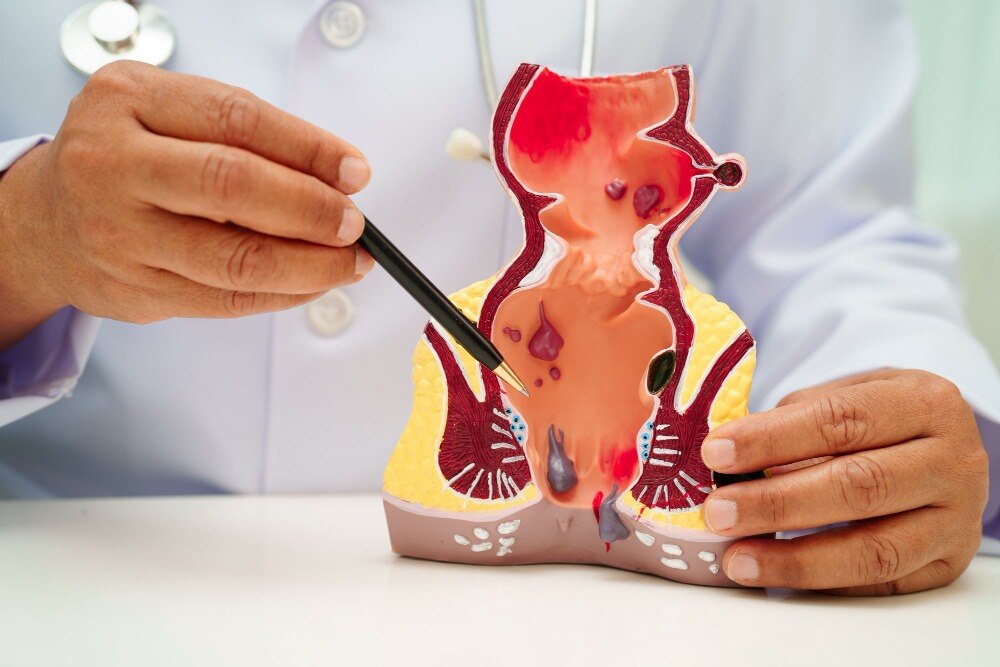
Laser treatment is usually considered for symptomatic internal haemorrhoids, not every lump or episode of bleeding. A surgeon takes your history, inspects the anus, performs a digital rectal examination and uses an anoscope to view the anal canal. This helps distinguish haemorrhoids from an anal fissure, fistula, abscess, polyp or tumour.
| Type | Clinical pattern | Laser suitability |
|---|---|---|
| Internal haemorrhoids | Grade I bleeds without prolapse; grade II prolapses with straining, then returns; grade III needs manual reduction; grade IV remains prolapsed | Most suitable for selected grade II and some grade III cases |
| External haemorrhoids | Lump outside the anal canal; a thrombosed lump is painful and clotted | Laser does not reliably remove the external component |
| Mixed haemorrhoids | Internal prolapse combined with external tissue or skin tags | Laser alone may leave the external disease untreated |
For grade I haemorrhoids, meaning bleeding without prolapse, treatment options usually include fibre, fluids, stool-softening measures, topical medicines and, if bleeding persists, rubber-band ligation, injection or infrared treatment. Laser is rarely the first choice.
The surgeon also checks the size of the prolapse, bleeding pattern, bowel habits and your priorities. Dark blood mixed through stool, weight loss, iron-deficiency anaemia, a new bowel-habit change, a mass or overdue colorectal screening calls for further testing, often colonoscopy, before treatment.
Ask which laser procedure is proposed: laser haemorrhoidoplasty shrinks internal tissue, while HeLP closes feeding arteries. Major prolapse, grade IV disease or substantial external tissue may require haemorrhoidectomy or another operation instead.
How laser haemorrhoid treatment works from preparation to discharge
Laser treatment is not one operation. Laser haemorrhoidoplasty (LHP) places a laser fibre beneath the lining and delivers controlled energy to shrink the internal haemorrhoidal cushion; the haemorrhoidal laser procedure HeLP uses laser energy to seal feeding arteries, usually with Doppler guidance for haemorrhoids.
- Before admission, discuss medicines, allergies, bleeding problems and previous anaesthesia. Follow the facility’s fasting instructions, arrange an adult escort, and use an enema only if specifically prescribed. The team confirms consent, examines the anal canal and records the planned technique.
- You change into a gown and receive monitoring, such as blood pressure, oxygen saturation and heart rate checks. Anaesthesia can be local anaesthesia with sedation, spinal anaesthesia or general anaesthesia; laser treatment does not mean you will be awake or pain-free without anaesthesia.
- After positioning, the surgeon inserts a small probe or makes a short anal-canal opening. For LHP, the laser fibre delivers several energy pulses into each selected haemorrhoid without cutting it away; for HeLP, Doppler identifies arterial blood flow and guides energy to close those vessels.
- The team checks for bleeding, removes the instruments and transfers you to recovery. You drink, pass urine and walk safely before discharge, provided pain and nausea are controlled.
Most patients leave the same day, but you need transport home and should not drive, drink alcohol or make important decisions for 24 hours after sedation or general anaesthesia. Obtain written instructions for pain relief, bowel care, contact numbers and the follow-up appointment.
Laser treatment versus other procedures for piles
Laser is not automatically the best option: it usually suits symptomatic internal grade II and selected grade III haemorrhoids, while substantial prolapse or external disease can favour another procedure.
| Option | Best suited to | Pain and bleeding | Anaesthesia and stay | Recurrence |
|---|---|---|---|---|
| Laser haemorrhoid treatment | Internal grade II or selected III; limited external disease | Usually less early pain and bleeding than excision; bowel movements can still hurt | Local anaesthesia with sedation, regional or general; usually day case | Higher recurrence than excision when prolapse is substantial |
| Rubber-band ligation | Small-to-moderate grade I–III internal haemorrhoids | Brief pressure or discomfort; bleeding can occur when the banded tissue separates | No anaesthesia or local anaesthetic; outpatient | Repeat sessions are common; recurrence can occur |
| Injection sclerotherapy | Small bleeding haemorrhoids, especially grade I–II | Usually mild pain; minor bleeding is possible | No anaesthesia; outpatient | Higher recurrence than excision |
| Infrared coagulation | Small grade I–II bleeding haemorrhoids | Low pain; short-lived bleeding can occur | No anaesthesia; outpatient | Recurrence and repeat treatment are common |
| Conventional excisional haemorrhoidectomy | Large grade III–IV, mixed, external or heavily prolapsing haemorrhoids | Most painful recovery; bleeding and urinary retention are recognised risks | Regional or general anaesthesia; day case or short admission | Lowest recurrence, but slower recovery |
| Stapled haemorrhoidopexy | Internal prolapse without a major external component | Less pain and bleeding than excision; serious bleeding is uncommon but important | Regional or general anaesthesia; usually day case or overnight | More recurrent prolapse than excision |
A surgeon must match the operation to prolapse, external components and your priorities, not the word “laser”. Dr Chirag Vaja can help compare the proposed technique with these alternatives and explain what happens if prolapse returns.
Related service
Piles And Fissures Piles And Fissures(Painless laser & Stapler Surgery) Piles & Fissures – Painless Surgery Available Suffering from pain, bleeding, or discomfort during bowel movements? Our advanced, minimally invasive... View service → |
Recovery, expected benefits and warning signs after laser treatment
Expect soreness, especially during bowel movements, for several days after treatment. Laser piles treatment recovery is often shorter and less painful than recovery from open excisional haemorrhoidectomy, but it is not necessarily symptom-free. Follow your discharge instructions for walking, driving, work and lifting; avoid strenuous exercise until pain and bleeding have settled.
Bleeding may improve quickly, but light spotting, swelling, mucus discharge, urgency or incomplete evacuation can persist for several weeks. Constipation increases pain and straining can disrupt healing. Drink enough fluid, eat fibre, respond promptly to the urge to pass stool, and ask whether a stool softener after haemorrhoid surgery is suitable for you.
Do not take laxatives or pain medicines that were not advised by your clinician.
The main expected benefit is earlier recovery, with less wound pain than an open operation. Laser treatment is not proven to provide a better long-term cure in every patient; studies use different techniques, laser settings and definitions of recurrence. Residual prolapse or recurrent symptoms remain possible.
Contact your surgeon urgently for:
- Heavy or persistent postoperative bleeding, clots, dizziness or fainting
- Fever, worsening swelling or pus-like discharge
- Inability to pass urine, which indicates possible urinary retention
- Severe or escalating pain, rather than pain that gradually improves
Delayed bleeding can occur after anorectal procedures, even when the first few hours are uneventful.
Questions to ask before booking laser treatment
Confirm the diagnosis, exact laser technique, anaesthesia, expected benefit and follow-up plan before consenting. “Laser” is not one standard operation: laser haemorrhoidoplasty (LHP) delivers energy beneath the lining to shrink internal haemorrhoids, while HeLP uses Doppler guidance to close supplying arteries.
Ask these questions before haemorrhoid surgery:
- Which haemorrhoid grade, external component, prolapse or skin tag are you treating, and why is laser preferable to banding, injection, stapling or excision?
- Will you remove tissue, shrink it, or seal its blood supply? What anaesthesia will you receive?
- What improvement is realistic for bleeding, prolapse and pain, and what symptoms might remain?
- How long is the follow-up schedule? Ask for the laser piles treatment follow-up dates, the warning signs to report, and the definition and time period used for haemorrhoid recurrence.
- What is the total cost, including anaesthesia, facility charges, medicines and treatment of complications?
| Condition | Treatment question | Detail to confirm |
|---|---|---|
| Internal haemorrhoids | Is LHP or HeLP appropriate? | Confirm the grade, prolapse and expected effect on bleeding. |
| External or mixed disease | Will laser address the external component? | Large external tissue, thrombosis or skin tags may need another procedure. |
| Anal fissure | Is this laser treatment for anal fissure versus haemorrhoids? | Confirm that examination identified a fissure; its treatment may involve fissure-specific medication, fissurectomy or sphincter surgery, not haemorrhoid laser treatment. |
If bleeding is unexplained, ask whether anoscopy, colonoscopy or another investigation is needed before treatment.
Frequently asked questions
Which haemorrhoids are suitable for laser treatment?
Laser treatment is mainly considered for symptomatic internal haemorrhoids after an examination confirms the diagnosis and severity. External lumps and other causes of anal symptoms require a different assessment.
How does laser haemorrhoid treatment work from preparation to discharge?
The process includes a surgical assessment, instructions about fasting and medicines when relevant, the laser procedure, monitoring afterwards and discharge with recovery instructions. Your surgeon will explain the anaesthesia and same-day care plan.
How does laser treatment compare with other procedures for piles?
Laser treatment differs from rubber-band ligation, sclerotherapy, haemorrhoidectomy and stapled haemorrhoidopexy in how tissue is treated, expected pain, recovery time and recurrence risk. The suitable option depends on haemorrhoid grade, symptoms and examination findings.
What recovery and warning signs should you expect after laser treatment?
Expect instructions for pain relief, bowel movements, wound care and activity. Contact your surgeon for heavy bleeding, fever, worsening pain, inability to pass urine or other symptoms that do not improve.
What questions should you ask before booking laser treatment?
Ask which haemorrhoids you have, why laser treatment suits you, which alternatives apply, what anaesthesia is planned, how recurrence is handled, the full cost and when you can resume normal activities.