Gallstones can cause a sustained attack of upper-abdominal pain, but they can also sit silently on an ultrasound or produce symptoms that resemble acidity, pancreatitis or heart disease. You will learn how to recognise the pattern, identify urgent warning signs, understand the tests, and discuss whether observation, duct treatment or gallbladder removal fits your situation.
Key takeaways
- Gallstone pain lasts 30 minutes to several hours and often follows a fatty meal.
- Seek same-day care for fever, jaundice, persistent vomiting, or severe worsening pain.
- Ultrasound usually checks for gallstones; blood tests assess infection or bile-duct blockage.
- Repeated attacks or complications often make laparoscopic gallbladder removal the safer option.
What does gallstone pain feel like, and when might another condition be responsible?
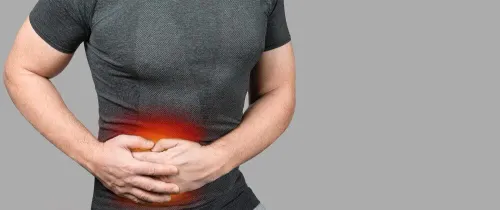
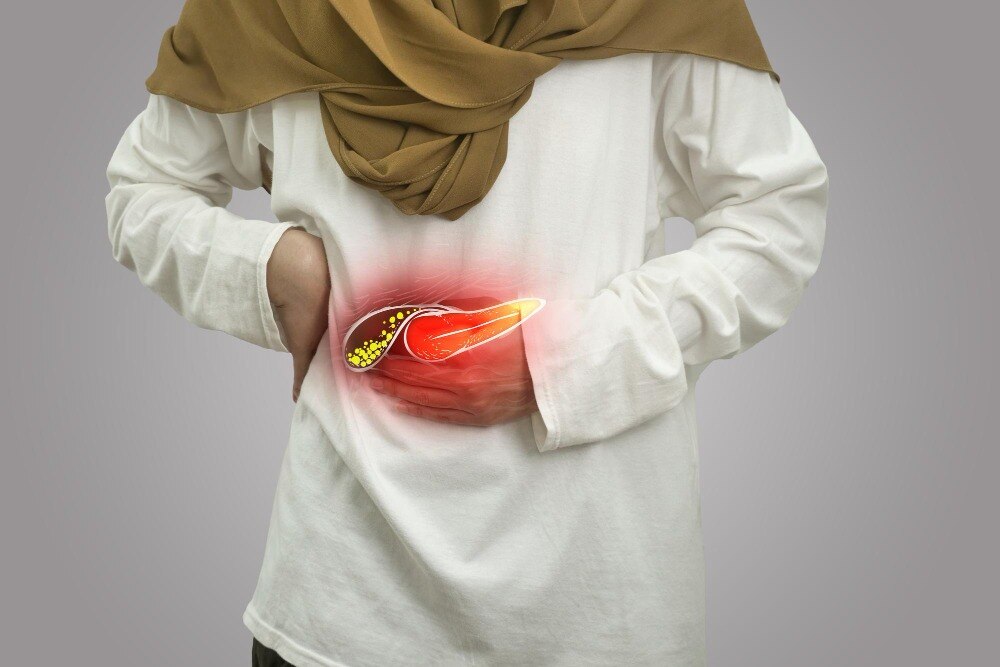
Gallstone pain is usually steady, moderate to severe right-upper-abdominal pain or pain in the upper middle abdomen. It often begins after a fatty meal, lasts 30 minutes to several hours, and may include pain radiating to the right shoulder or back. Nausea and vomiting from gallstones can accompany the attack.
| Possible cause | Pattern that points towards it | Clues that make gallstones less likely |
|---|---|---|
| Gallstones | Sustained pain after eating, especially under the right ribs; nausea or vomiting | Pain lasting only seconds, shifting repeatedly, or occurring without a consistent pattern |
| Reflux or gastritis | Burning behind the breastbone or upper-middle abdominal discomfort; sour taste or relation to lying down | Severe, fixed pain under the right ribs |
| Pancreatitis | Severe, continuous upper-abdominal pain reaching the back, with repeated vomiting | Mild pain that settles quickly |
| Heart-related pain | Pressure, squeezing or heaviness in the chest, sometimes spreading to the arm, jaw or back | Pain clearly linked to meals and localised under the right ribs |
| Appendicitis or liver disease | Pain moving towards the lower right abdomen, or illness with jaundice and marked tenderness | Isolated, familiar attacks without other illness |
Bloating, gas, heartburn and vague food intolerance do not prove that stones are causing symptoms. Stones found by chance often cause no symptoms at all. Pain that persists for several hours, worsens with tenderness, or comes with fever, chills, jaundice, dark urine, pale stools, confusion or fainting needs same-day medical assessment.
When does a gallstone attack require same-day medical care?
Seek same-day medical care if pain continues for several hours, becomes severe or constant, or you develop abdominal tenderness, fever, vomiting or worsening illness. This pattern suggests acute cholecystitis rather than uncomplicated biliary colic.
| Pattern | Possible complication | What to do |
|---|---|---|
| Biliary colic | Temporary duct blockage: steady right-upper-abdominal pain, often after eating, without fever or jaundice | Arrange prompt medical assessment if the pain does not settle; do not wait for a routine appointment |
| Acute cholecystitis | Gallbladder inflammation causing persistent pain, abdominal tenderness, fever or chills | Attend a same-day clinic or hospital |
| Bile-duct obstruction | Yellow eyes or skin, dark urine, pale stools or widespread itching | Seek same-day assessment for blood tests and imaging |
| Cholangitis | A blocked, infected bile duct, especially fever with chills and jaundice with upper-abdominal pain | Go to an emergency department immediately |
| Gallstone pancreatitis | Severe upper-abdominal pain extending to the back, repeated vomiting or marked weakness | Seek emergency care; pancreatitis requires hospital assessment |
Confusion, fainting, breathlessness, inability to keep fluids down, or rapidly worsening pain raises the urgency further. Call emergency services rather than driving yourself if you feel faint or confused. A common-bile-duct stone needs treatment to clear the duct; gallbladder removal alone does not reliably remove it.
How do doctors confirm whether stones are causing the symptoms?
Doctors decide whether stones are responsible by matching the pain pattern with objective signs of inflammation or blockage—not by treating every stone seen on a scan. They ask when pain began, where it sits, how long it lasts, whether meals trigger it, and whether nausea, vomiting, jaundice, fever or previous attacks accompany it.
A symptom-free person with stones often has incidental stones.
They usually check:
- Examination: tenderness in the right upper abdomen, guarding, fever, jaundice, dehydration and pain that persists rather than settles.
- Blood tests: liver-function tests, including bilirubin, alkaline phosphatase and transaminases, plus a complete blood count. Raised bilirubin or a cholestatic pattern supports blockage; a high white-cell count supports inflammation.
- Imaging: an abdominal ultrasound looks for gallstones, gallbladder-wall thickening, surrounding fluid and a widened bile duct. It can miss a common-bile-duct stone.
- Further duct assessment: if the duct is dilated or liver tests are abnormal despite an unclear ultrasound, MRCP or endoscopic ultrasound can look for common-bile-duct stones. ERCP is usually used to remove a confirmed or strongly suspected duct stone, not simply to diagnose one.
Treatment becomes relevant when stones correlate with repeated typical attacks, cholecystitis, pancreatitis or duct obstruction. Stones found without biliary symptoms usually need observation, not preventive gallbladder removal.
Which treatments help, and when does gallbladder removal become the safer choice?
For recurrent symptomatic stones, laparoscopic cholecystectomy is usually the definitive treatment; pain relief and dietary changes control symptoms but do not remove stones.
| Option | Timing and process | Limits and risks |
|---|---|---|
| Pain relief | Use during an attack, with medicines such as an anti-inflammatory or prescribed analgesic. | It does not prevent another attack and can mask worsening infection or obstruction. |
| Dietary fat reduction | Try smaller meals and less fried or greasy food while awaiting assessment or surgery. | It may reduce attacks for some people, but it is not a cure. |
| Ursodeoxycholic acid | Take for months under specialist supervision to dissolve selected cholesterol stones, or after rapid weight loss in selected bariatric patients. | It works slowly, does not suit every stone, and stones can recur; it is not a substitute for surgery in recurrent disease. |
| ERCP | An endoscope passes through the mouth to remove a confirmed or strongly suspected common-bile-duct stone, before or around gallbladder surgery. | It does not remove the gallbladder. Pancreatitis, bleeding and perforation are recognised risks. |
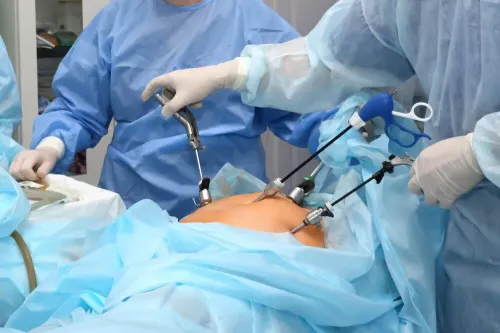
| Laparoscopic cholecystectomy versus open surgery | Keyhole removal uses several small incisions; open surgery uses one larger incision and is reserved for complex cases or when keyhole surgery is unsafe. | Keyhole surgery usually means less pain and faster recovery; both carry bleeding, infection and bile-duct injury risks. |
If acute cholecystitis is diagnosed and you are fit for surgery, early removal—within one week of diagnosis—is safer than routinely waiting several weeks. A duct stone needs clearance as well; gallbladder removal alone will not reliably remove it.
What should you ask before deciding on gallstone treatment?
Take your symptom timeline, ultrasound report, blood-test results and complete medicine list to the consultation. Note the last attack, its duration, food triggers, vomiting, fever or jaundice, because timing can change the safest plan.
1. Ask whether the stones are causing symptoms or were found incidentally. Stones without biliary symptoms usually do not need preventive surgery.
2. Ask whether you need an MRCP or endoscopic ultrasound. If ultrasound shows a widened bile duct or abnormal liver tests, these tests can look for a duct stone; ERCP is usually reserved for treatment when a duct stone is confirmed or strongly suspected.
3. Ask how urgent treatment is. Mild gallstone pancreatitis often calls for gallbladder removal during the same admission, while severe pancreatitis or ongoing complications can require delay. A duct stone may need ERCP or surgical duct clearance as well as gallbladder removal.
4. Tell the surgeon if you are pregnant or planning pregnancy. Discuss the trimester, symptoms, anaesthesia and the risk of postponing treatment rather than assuming surgery must wait.
5. Discuss your age, frailty, diabetes and glucose medicines. Ask about infection control, blood-sugar management, medication changes, fasting and anaesthesia, and whether a preoperative assessment is needed.
6. Report previous abdominal surgery, scars and any blood thinners. Adhesions or altered anatomy can affect the approach, hospital stay and recovery.
At a consultation with Dr Chirag Vaja, ask which findings would change the plan from observation to surgery and what warning symptoms should send you back urgently.
Related services
Laparoscopic Surgery Laparoscopic Surgery (Gallbladder Stones,Appendix) Laparoscopic Surgery (Gallbladder Stones & Appendix) Laparoscopic surgery is a modern, minimally invasive surgical technique used to treat conditions... View service → |
Gastro-intestinal Surgery Gastro-intestinal (GI) surgery focuses on the diagnosis and surgical treatment of disorders affecting the digestive tract, including the esophagus,... View service → |
Frequently asked questions
What does gallstone pain feel like?
Gallstone pain is usually steady, moderate to severe pain in the right upper abdomen or upper middle abdomen. It can begin after a fatty meal and radiate to the right shoulder or back, with nausea or vomiting.
When does a gallstone attack require same-day medical care?
Seek same-day medical care for fever, yellow skin or eyes, persistent vomiting, severe or worsening pain, dark urine, pale stools, or pain lasting several hours.
How do doctors confirm whether stones are causing the symptoms?
Doctors use your symptom pattern, abdominal examination, blood tests such as liver-function tests and bilirubin, and usually an abdominal ultrasound. Further imaging may be needed when a bile-duct stone is suspected.
When does gallbladder removal become the safer choice?
Laparoscopic gallbladder removal is commonly considered after repeated symptomatic attacks or complications such as cholecystitis, pancreatitis, jaundice, or bile-duct obstruction.
What should you ask before deciding on gallstone treatment?
Ask whether your symptoms are caused by the stones, whether a bile-duct stone is present, what alternatives apply, why surgery is recommended, how recovery will work, and what warning signs require urgent care.