A visible vein is not always an urgent problem, but bleeding, sudden one-sided swelling, skin damage and persistent functional symptoms change the decision. By the end, you will know which signs need emergency care, which justify a specialist appointment, and how testing guides treatment choices.
Key takeaways
- Sudden one-sided swelling, calf pain, warmth or redness needs urgent assessment.
- Skin ulcers, bleeding veins and recurring inflammation warrant specialist review.
- Duplex ultrasound helps match vein treatment to the underlying blood-flow problem.
- Ask about risks, alternatives, recovery and recurrence before choosing laser treatment.
Which varicose-vein symptoms need urgent medical attention?
Sudden one-sided leg swelling is not simply evidence that a varicose vein has worsened. New calf pain or tenderness, warmth and redness are urgent varicose vein symptoms and DVT warning signs; they can indicate deep-vein thrombosis. Seek urgent medical assessment rather than booking a routine appointment.
| Symptom | What it may indicate | What to do |
|---|---|---|
| Sudden one-sided swelling, calf pain, warmth or redness | Deep-vein thrombosis | Seek urgent medical assessment |
| Chest pain, breathlessness or coughing blood | Pulmonary embolism, sometimes linked to DVT | Call emergency services immediately |
| Steady aching, heaviness or mild swelling in both legs | Varicose-vein disease without an obvious emergency | Arrange a routine specialist appointment |
Chest pain, breathlessness or coughing blood requires emergency care, especially with leg symptoms. Do not drive yourself if you feel faint or severely breathless.
For bleeding varicose vein first aid, take these steps immediately:
- Lie down.
- Raise the bleeding leg above heart level.
- Press firmly and continuously on the bleeding point with clean cloth or gauze.
Call emergency services for heavy or persistent bleeding, faintness or weakness. Do not remove the first dressing if blood soaks through; add another layer and keep pressing. A routine appointment suits stable symptoms, but a specialist assessment is important when pain or swelling is worsening or does not match the visible veins.
Which skin changes and recurring problems indicate specialist assessment?
Brown or purple skin discoloration around ankle is a sign of chronic venous disease, not merely a cosmetic change. Varicose vein eczema, inflammation, hardening, induration, lipodermatosclerosis, or hard tender veins around a varicosity also warrant specialist assessment, even when pain is mild.
| Finding | What it suggests | What to arrange |
|---|---|---|
| Skin discoloration, eczema or inflammation | Persistent venous pressure and skin damage | Specialist assessment before changes progress |
| Hardening or tenderness around a vein | Inflammation or induration of affected tissue | Review, especially with hard tender veins |
| Superficial thrombophlebitis recurrence | Repeated inflammation and possible ongoing reflux | Assessment of the underlying venous pattern |
| Venous leg ulcer | Advanced venous disease with impaired healing | Venous reflux assessment and wound care |
A venous leg ulcer linked to varicose veins needs assessment rather than cosmetic treatment. Arrange referral if it has not healed within two weeks, or sooner if it enlarges, becomes more painful or produces increasing discharge.
Book specialist care when symptoms persist or worsen, interfere with walking, standing, sleep or work, or return despite movement, leg elevation and compression. Pregnancy-related veins often improve after delivery, but persistent aching, swelling or skin changes after pregnancy still deserve assessment.
Recurrent symptoms or new skin changes after previous treatment also need review rather than automatic repeat treatment.
How can a specialist distinguish venous disease from other causes of leg swelling?
Large visible veins do not prove that varicose veins cause severe symptoms. A small surface vein can coexist with significant chronic venous insufficiency, while prominent veins can be painless and unrelated to swelling.
| Cause | Clues that guide assessment |
|---|---|
| Chronic venous insufficiency | Aching or heaviness that worsens with standing and improves with leg elevation; ankle pigmentation, eczema or ulcers may appear. |
| Cellulitis or DVT | Cellulitis causes hot, tender, spreading redness; DVT causes sudden one-sided swelling, calf pain or tenderness, warmth and redness. Seek urgent assessment for possible DVT. |
| Lymphedema versus varicose veins | Lymphedema causes persistent swelling, often involving the foot and toes, with skin thickening; varicose veins are enlarged, twisted surface veins. |
| Muscle, joint or nerve problems | Pain follows movement, a joint, back, or a nerve distribution rather than venous pressure. |
| Medication, heart or kidney disease | Medicines such as amlodipine can cause swelling; heart or kidney disease often causes swelling in both legs and requires medical evaluation. |
A specialist starts with your medical history, including when symptoms began, whether they worsen during the day, previous clots, procedures and medicines. The examination includes:
- Inspecting both legs while you stand
- Checking skin colour, eczema, thickening and ulcers
- Assessing tenderness and feeling pulses in the feet
- Performing a duplex ultrasound
The scan maps superficial and deep veins, measures blood flow and identifies reflux, meaning backward flow through faulty valves. It shows whether the visible veins explain your pain or swelling before treatment is considered.
How does duplex ultrasound guide the choice between observation, compression and procedures?
Duplex ultrasound for varicose veins shows where venous reflux occurs, while your symptoms determine whether finding it requires treatment. Mild reflux without pain, swelling, skin damage or ulcers can suit observation. Aching, swelling, sleep disruption or difficulty standing shifts the decision towards active management.
1. Observation suits mild disease without complications. Review the leg if pain, swelling, skin changes or bulging veins develop or worsen.
2. Compression stockings can reduce aching and swelling by supporting venous return. They do not remove varicose veins, and they do not replace an appropriate intervention when treatment is suitable.
3. Confirmed truncal reflux that causes significant symptoms usually leads to endothermal treatment. Endovenous laser ablation or radiofrequency ablation closes the faulty refluxing vein, allowing blood to reroute through healthier channels.
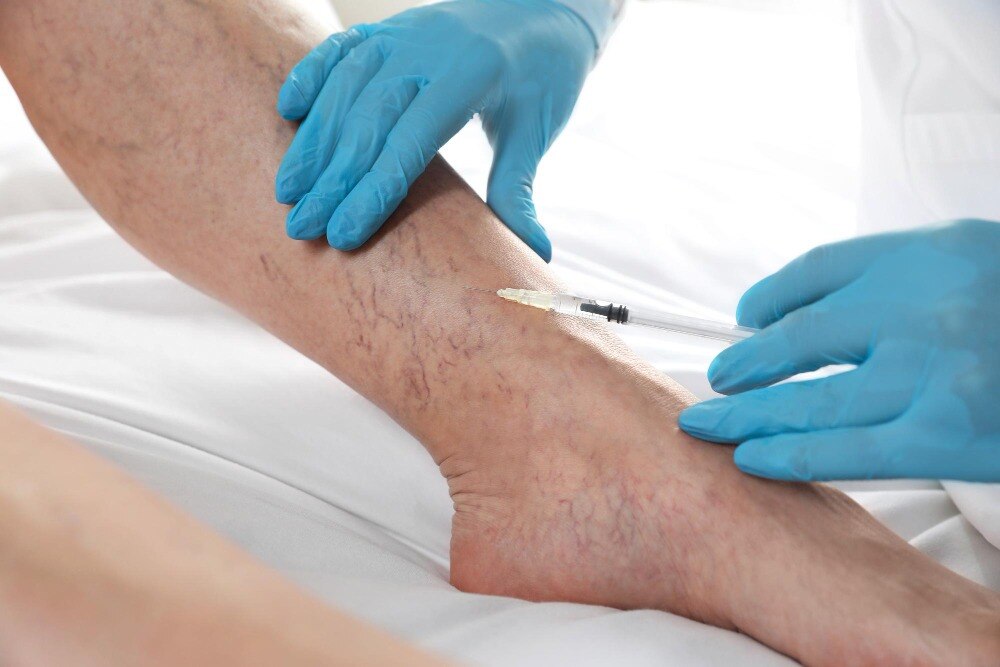
4. If endothermal treatment is unsuitable, ultrasound-guided foam sclerotherapy is the usual next option. The injected foam closes the abnormal vein under ultrasound guidance.
5. If foam sclerotherapy is unsuitable, surgery can remove or tie off the affected vein.
6. Ambulatory phlebectomy can remove selected surface veins through tiny skin punctures, often after the underlying reflux pattern has been mapped.
Treating a visible surface vein without identifying the network feeding it can leave the cause untouched. The scan therefore connects the visible veins to the deeper and truncal circulation, preventing a cosmetic-looking procedure from missing the source of your symptoms.
What should you clarify before choosing laser treatment or another intervention?
Endovenous laser treatment is not suitable for every vein pattern. Laser treatment suitability depends on duplex ultrasound findings, the vein’s route and whether a catheter can reach it safely.
A clinician must assess possible endovenous laser contraindications, including acute deep-vein thrombosis, infection at the entry site, severe arterial disease and anatomy that cannot be accessed safely. These findings require individual assessment, not blanket exclusions.
Ask these questions before choosing a procedure:
- Which vein is refluxing, and is it superficial, truncal or deep?
- What does the duplex ultrasound show about blood flow, reflux and vein anatomy?
- How does radiofrequency ablation versus laser compare for my vein?
- Would foam sclerotherapy, phlebectomy or surgery fit the vein pattern better?
- How will you monitor for recurrence after treatment?
| Option | What it does | When it may fit |
|---|---|---|
| Endovenous laser ablation | Closes a refluxing vein from inside | Accessible truncal reflux requiring endothermal treatment |
| Radiofrequency ablation | Uses heat to close the faulty vein | Another endothermal option for suitable anatomy |
| Foam sclerotherapy | Injects foam to close the vein | When endothermal treatment is unsuitable |
| Phlebectomy | Removes selected surface veins through small openings | Localised bulging tributaries |
| Surgery | Removes or ties off affected veins | When less invasive options do not fit |
New bulging veins, renewed symptoms or skin changes after treatment indicate recurrent varicose veins and need duplex ultrasound. Veins can reopen or new reflux can develop. Dr Chirag Vaja in Navi Mumbai can use this examination-led approach when discussing minimally invasive or laser-assisted care.
Related service
Varicose vein (Laser) Varicose Vein Treatment with Laser Varicose veins are enlarged, twisted veins that commonly appear on the legs and feet. View service → |
Frequently asked questions
Which varicose-vein symptoms need urgent medical attention?
Seek urgent medical assessment for sudden one-sided leg swelling, new calf pain or tenderness, warmth and redness because these signs can indicate deep-vein thrombosis.
Which skin changes indicate specialist assessment?
Book specialist assessment for skin darkening, thickening, eczema, ulcers, bleeding varicose veins or recurring inflammation around the ankle or lower leg.
How can a specialist distinguish venous disease from other causes of leg swelling?
The specialist reviews your symptoms, examines both legs and uses duplex ultrasound to assess vein structure, blood flow and reflux. Other causes require different evaluation.
How does duplex ultrasound guide treatment?
Duplex ultrasound identifies reflux, blocked veins and the veins responsible for symptoms, helping determine whether observation, compression or a procedure is appropriate.
What should you clarify before choosing laser treatment?
Ask which vein will be treated, why laser is recommended, what alternatives exist, expected recovery, risks, compression requirements and the chance of recurrent veins.